Washington, DC gets a lot of attention for its monuments and federal buildings, and rightly so. After spending some time here, you quickly realize the city has a live entertainment calendar that rivals almost anywhere on the East Coast. The region’s venues range from a downtown arena a few steps from the Metro to outdoor amphitheaters spread across Virginia and Maryland, and between them they cover just about everything: playoff hockey, major league baseball, orchestral residencies, sold-out music festivals, and late-night electronic performances.
This guide covers ten venues that draw the largest audiences in and around the capital. Whether you’re organizing a group outing, deciding between lawn and covered seats, or just trying to work out the logistics before you commit to a ticket, the details on capacity, location, and access are here to help you plan the full night, not just the show.
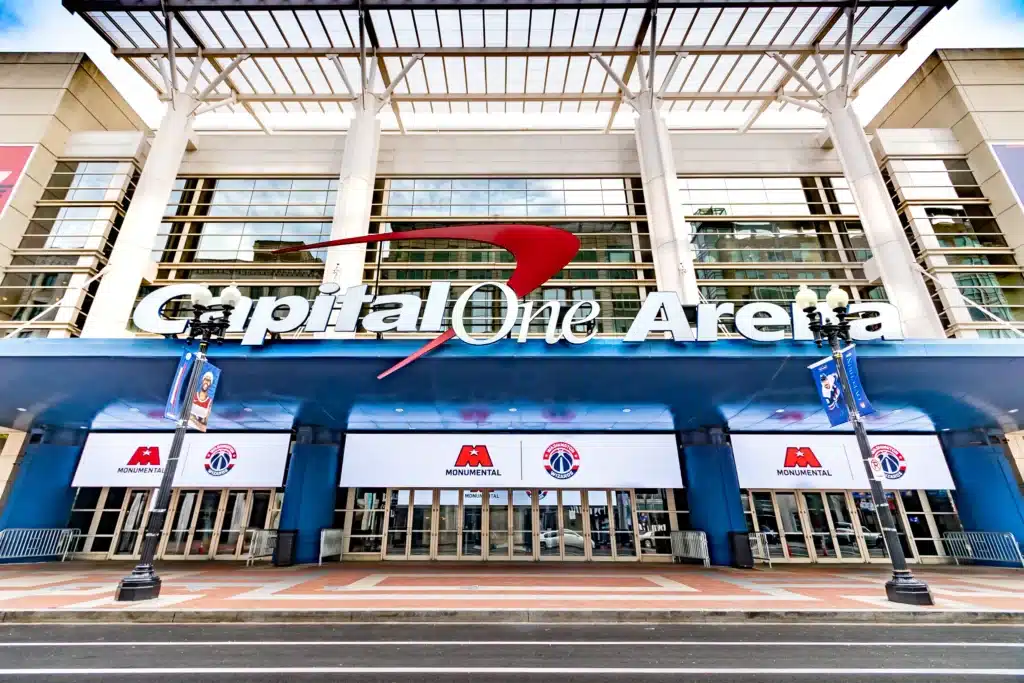
[Photo: Capital One Arena]
Opened in 1997 as the MCI Center, Capital One Arena occupies the corner of 7th and F Streets NW in the Penn Quarter neighborhood. The venue seats up to 20,356 for concerts and serves as the home arena for the Washington Capitals (NHL) and Washington Wizards (NBA). It has hosted events across a wide range, from Grammy-winning concert tours and UFC cards to NCAA basketball and political conventions, and it consistently ranks among the most-attended arenas in North America by annual ticket count.
The building has undergone ongoing upgrades to premium seating, hospitality areas, and concourse experience to keep pace with contemporary arena standards. Penn Quarter itself has grown into one of DC’s most complete dining and entertainment districts, with restaurants, bars, and theaters concentrated within a few blocks of the arena, making it a natural base for anyone planning a full evening around a show. Penn Quarter regularly hosts multiple events on the same evening across its theaters and venues, which means curb access around the arena is competitive, and rideshare queues grow quickly after showtime.
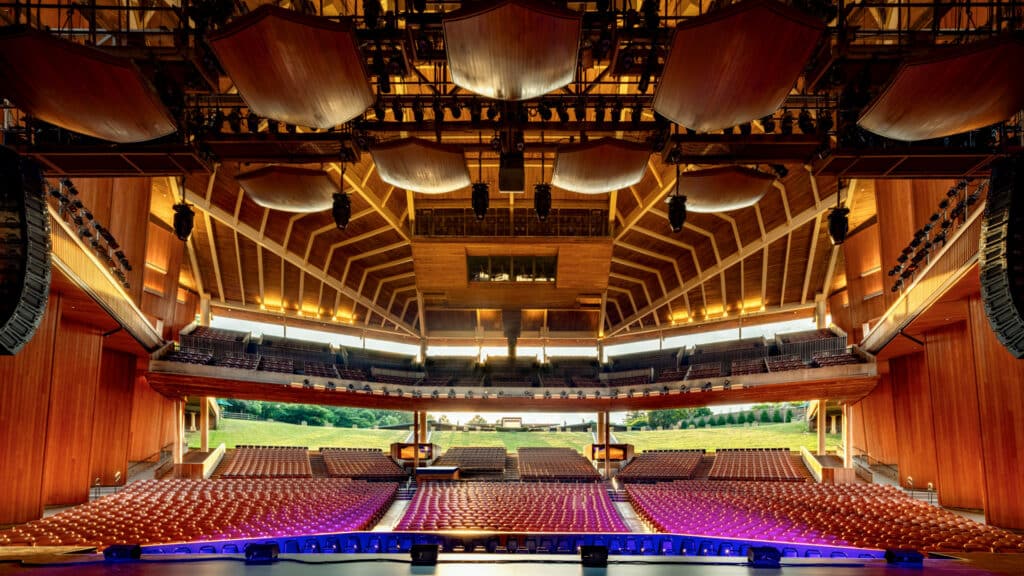
[Photo: Wolf Trap]
Wolf Trap holds a distinction no other concert venue in the country can claim: it is the only national park in the United States dedicated to the performing arts. Catherine Filene Shouse donated the 117-acre site in Vienna, Virginia, to the federal government in 1966, and the Filene Center amphitheater opened in 1971. The main stage seats 7,028, with 3,500 under the covered roof and the rest on the surrounding lawn.
The outdoor programming runs May through September, covering the National Symphony Orchestra’s summer residency, Broadway productions, folk, and contemporary acts. The Barns at Wolf Trap, a 382-seat indoor space on the same property, operates a separate schedule of acoustic and chamber performances year-round. Wolf Trap is 15 miles from downtown DC in Fairfax County, making it a genuine evening destination rather than a quick stop. One detail that surprises first-timers: guests with lawn tickets are welcome to bring their own food and wine for a pre-show picnic on the grounds, and many regulars treat that as the real start of the evening. It is one of the few places in the DC area where the outdoor setting, the programming quality, and the lawn picnic tradition combine into something that feels genuinely distinct from a standard concert night.
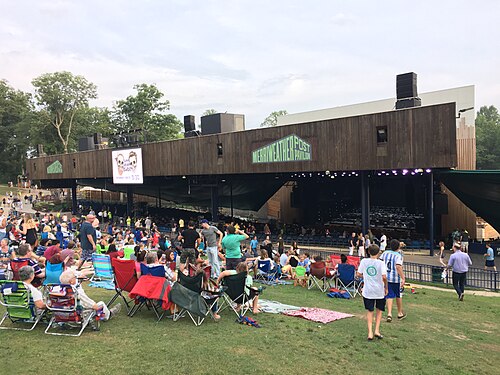
[Photo: Merriweather Post Pavilion]
Merriweather Post Pavilion opened in 1967 in Columbia, Maryland, about 22 miles northeast of downtown DC, and has operated continuously as one of the mid-Atlantic’s primary outdoor concert destinations. Total capacity reaches 19,319, split between 4,950 covered pavilion seats and a large open lawn. A major renovation completed in 2018 upgraded the stage, sightlines, and backstage infrastructure. The Merriweather District development added dining and retail on the surrounding property, giving the campus a more complete destination feel than it had for most of its history.
The booking calendar covers May through September and leans toward festival headliners and major touring acts across rock, hip-hop, and country. The venue is set within the planned community of Columbia, surrounded by wooded trails and lakes, which gives it a different feel from an urban arena. Parking is available on-site and in adjacent lots. Lawn chairs and blankets are welcome in the general admission sections, and outside food is permitted, which is worth knowing if you’re planning a proper evening rather than just a show. The venue’s wooded setting and programming range are part of what has kept it relevant as a destination for more than five decades.
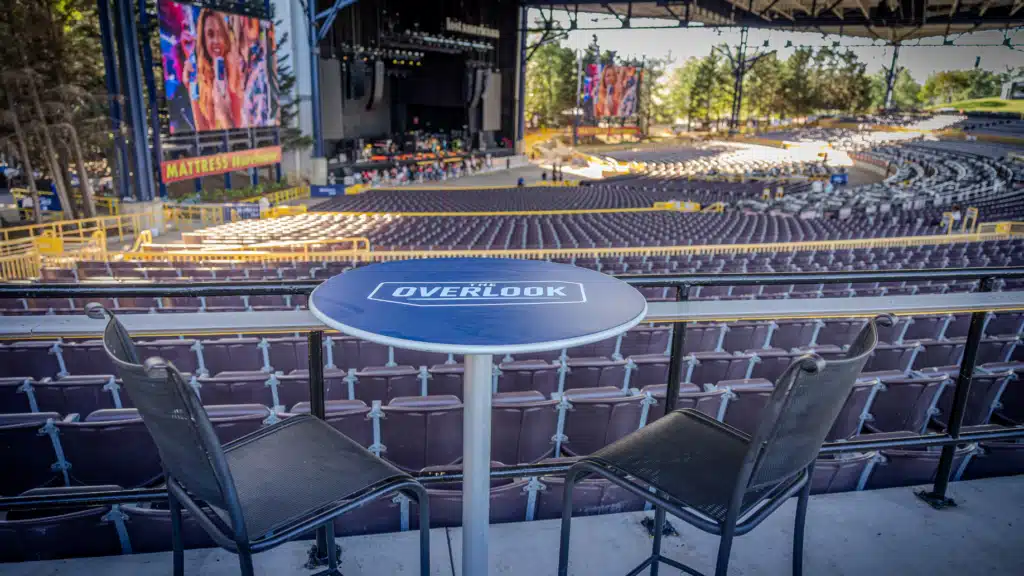
[Photo: Jiffy Lube Live]
Located in Bristow, Virginia, about 30 miles southwest of DC, Jiffy Lube Live is the largest outdoor music venue in the Washington region by capacity. The amphitheater holds 25,000 across a covered pavilion and an open lawn and operates from late spring through early fall. Originally called Nissan Pavilion when it opened in 1995, the venue has gone through several names over the years; Jiffy Lube has held the naming rights since 2010, though most DC concert-goers still know it simply as the big amphitheater out on I-66.
The venue attracts major touring productions that need outdoor staging and audience capacity an indoor arena cannot provide. Lawn chairs and blankets are welcome in the general admission sections, and outside food is permitted, so most people treat the evening as a full outing rather than just a show. If the act you want requires a stage and a crowd of that scale, the amphitheater is where it happens in the DC area.
[Photo: Nationals Park]
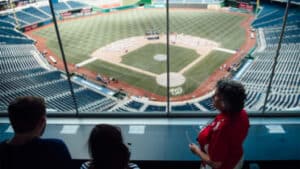
Nationals Park opened in March 2008 as the first LEED Silver-certified major professional sports stadium in the United States. Nationals Park anchors the Navy Yard neighborhood on the Anacostia waterfront, about two miles southeast of the Capitol, and seats 41,339 for baseball. It is the home of the Washington Nationals (MLB) and has hosted events beyond the regular schedule, including Pope Francis’s address to DC residents in September 2015, All-Star Week, and large-scale concert productions.
The Navy Yard neighborhood has grown substantially around the ballpark since it opened, with restaurants and bars now concentrated along First Street SE, making it one of the better pre-game destinations in the city. The Navy Yard-Ballpark Metro station on the Green Line is directly adjacent to the main entrance, making it one of the more transit-accessible stadiums in the region. Dedicated parking lots are nearby, and the surrounding streets fill with activity well before first pitch.
[Photo: Audi Field]
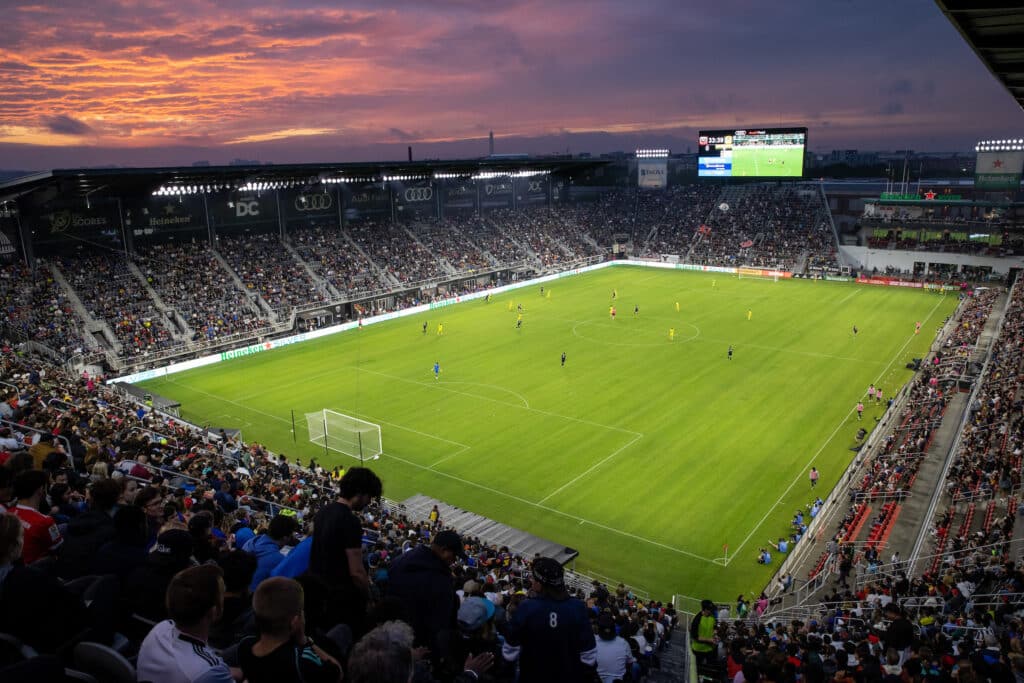
Audi Field opened in July 2018 at Buzzard Point, at the confluence of the Anacostia and Potomac Rivers, about a mile from Nationals Park along the Southwest waterfront. The 20,000-seat venue is the home of DC United (MLS) and was the first privately financed soccer-specific stadium in the United States built on publicly owned land. It also hosts Washington Spirit (NWSL) matches and has been used for international soccer fixtures and CONCACAF events.
The steeply raked seating bowl puts every row close to the pitch, and the open-end view toward the waterfront gives it an atmosphere that stands apart from most venues in the region. Parking in the area fills quickly for high-demand fixtures. On a full-house night, the compact bowl at Audi Field and the pitch-side sightlines create an atmosphere that is difficult to replicate in a larger, more general-purpose stadium.
[Photo: Northwest Stadium]
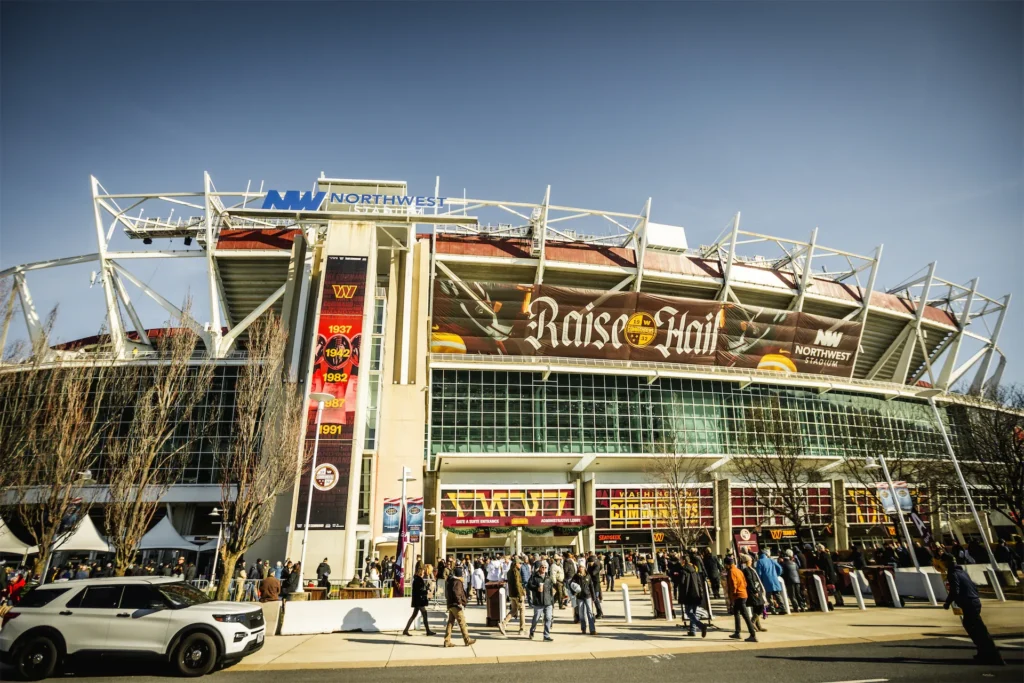
Northwest Stadium (formerly FedExField) in Landover, Maryland, is the home of the Washington Commanders (NFL), about 8 miles from downtown DC. The stadium opened in 1997 as Jack Kent Cooke Stadium, became FedExField in 1999, and took its current name when the Commanders sold the naming rights to Northwest Federal Credit Union. With a seating capacity of approximately 65,000, it is one of the larger stadiums in the NFL and one of the highest-capacity venues in the region. Beyond the Commanders’ regular season schedule, the stadium has hosted major concerts and events that require the kind of staging and attendance figures that few venues in the mid-Atlantic can match.
The surrounding area is primarily highway-accessible via I-495 and Route 50, and tailgating in the extensive lots around the stadium is a well-established part of game day for Commanders fans. Divisional matchups and playoff games are among the highest-demand events, and tickets along with parking move quickly for those fixtures. Booking both well in advance gives you considerably more flexibility on the day. The tailgating culture in the surrounding lots at Northwest Stadium is one of the more established game-day traditions in the NFL, and for a full Sunday fixture it becomes an event in its own right.
[Photo: Echostage]
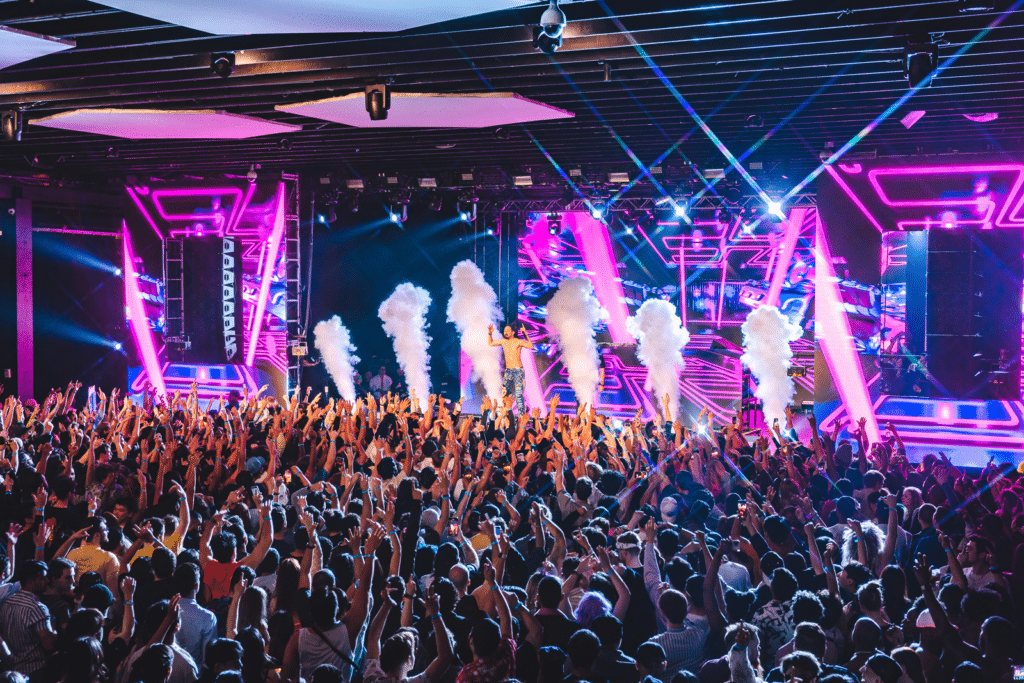
Echostage opened in 2012 in a commercial stretch of New York Avenue NE, northeast of downtown DC. At approximately 30,000 square feet with a capacity of around 3,000, it is one of the largest dedicated nightclub and electronic music venues in the United States. The booking calendar focuses on electronic dance music, DJ performances, and late-night productions, primarily on weekends and for special events.
Its reputation extends well beyond DC. Echostage consistently appears on national rankings of top nightclubs and has hosted major international touring names in electronic music alongside regular resident nights that draw audiences from across the region. The main room functions as a single open floor without fixed seating, configured to adapt to the specific staging and production requirements of each event. The custom sound system and full-scale lighting rig are designed for major touring productions rather than a standard club setup. Most events are 18 or older, while certain nights require guests to be 21 and up, so checking the individual listing matters when a group includes different ages. Sets may continue until 2 or 3 in the morning, and no other venue in the DC area operates at quite the same scale for late-night electronic music.
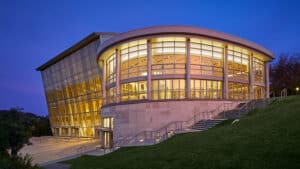
[Photo: Music Center at Strathmore]
The Music Center at Strathmore opened in 2005 on a 16-acre campus in North Bethesda, Maryland, about 13 miles from downtown DC. The main concert hall seats 1,976 in a steeply raked configuration that prioritizes acoustic clarity, and it hosts the Baltimore Symphony Orchestra’s Washington season alongside national touring acts, chamber performances, and world music programs throughout the year. A smaller performance space on campus, the Mansion at Strathmore, handles more intimate programming and gallery exhibitions.
Strathmore connects directly to the Grosvenor-Strathmore station on the Red Line, making it one of the most transit-accessible performing arts venues in the greater DC area. The campus has dedicated parking, though it fills on busy nights. Baltimore Symphony nights and higher-profile touring acts tend to sell out, sometimes a few weeks ahead, so if you have a specific performance in mind, booking early is worthwhile. The programming is notably varied in format and genre, which makes it one of the more versatile mid-size venues in the region. Its location also gives your party a reason to arrive early, have dinner along Rockville Pike, and continue to the hall without rushing.
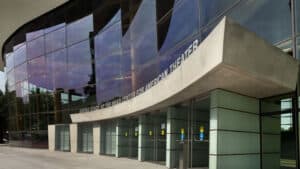
[Photo: Arena Stage]
Arena Stage is one of the oldest regional theater companies in the United States, founded in Washington, DC in 1950. The company operates three performance spaces at the Mead Center for American Theater on Maine Avenue SW, adjacent to The Wharf development along the Southwest waterfront. The largest space, the Fichandler Stage, seats up to 680 in an in-the-round configuration. The Kreeger Theater holds 510, and the Kogod Cradle accommodates 202 for experimental and workshop productions.
The venue’s programming focuses on American plays and musicals, including world premieres, major revivals, and productions developed for national tours. The company has a long reputation for work that reaches Broadway, making its productions of particular interest to theater audiences visiting from out of town. World premieres and productions generating significant buzz ahead of opening tend to sell out well in advance, and season subscribers get first access, so for anything on the Fichandler Stage that you have your eye on, booking as soon as dates are announced is the safer approach. The Southwest Waterfront location has changed considerably since The Wharf opened in 2017, with dining and nightlife now directly adjacent to the theater complex. The Wharf puts dinner, drinks, and waterfront views within steps of the theater entrance.
Every venue in Washington, DC, suits a different kind of night. Here’s a quick look at the practical factors side by side, so you can find the right fit before you commit.
| Venue | Type | Capacity | Metro Access | Parking |
| Capital One Arena | Indoor Arena | 20,356 | Direct (Gallery Place-Chinatown) | Garage & street parking nearby |
| Wolf Trap | Outdoor Amphitheater | 7,028 | Shuttle from McLean Metro (summer) | Free on-site parking |
| Merriweather Post Pavilion | Outdoor Amphitheater | 19,319 | No direct Metro | On-site & local garage parking |
| Jiffy Lube Live | Outdoor Amphitheater | 25,000 | No direct Metro | Expansive on-site lots |
| Nationals Park | Baseball Stadium | 41,339 | Direct (Navy Yard-Ballpark) | On-site paid garages |
| Audi Field | Soccer Stadium | 20,000 | 15-min walk (Waterfront) | Limited nearby garages |
| Northwest Stadium | NFL Stadium | ~65,000 | 1-mile walk (Morgan Boulevard) | Extensive on-site lots |
| Echostage | Nightclub | ~3,000 | No direct Metro (Rideshare/Car) | Third-party lots and street parking |
| Music Center at Strathmore | Concert Hall | 1,976 | Direct (Grosvenor-Strathmore) | Dedicated garage on-site |
| Arena Stage | Regional Theater | 680, 510 and 202 | 10-min walk (Waterfront) | On-site garage & street |
A few details that apply across most of these venues and are easy to miss until you’re already there.
Washington DC’s entertainment options cover a range that few metro areas match, from a 25,000-capacity amphitheater 30 miles out in Virginia to a 202-seat experimental theater on the Southwest waterfront. The right venue usually comes down to the specific show, the size of your group, and how much the surrounding details matter on that particular night. Whichever one you’re heading to, knowing what to expect before you arrive makes the evening itself that much easier to enjoy.


